Thursday, 21 March 2013

Learning/Sharing Session on the 3rd International Conference on Sign Linguistics and Deaf Education

German and Brazilian Sign Language
Ms. Anabelle Salazar and Mr. Raphael Domingo


Documenting Bilingual Strategies Used by Deaf Mothers and Teachers
Ms. Febe Sevilla


How Deaf Children Learn
Ms. Christina Sison


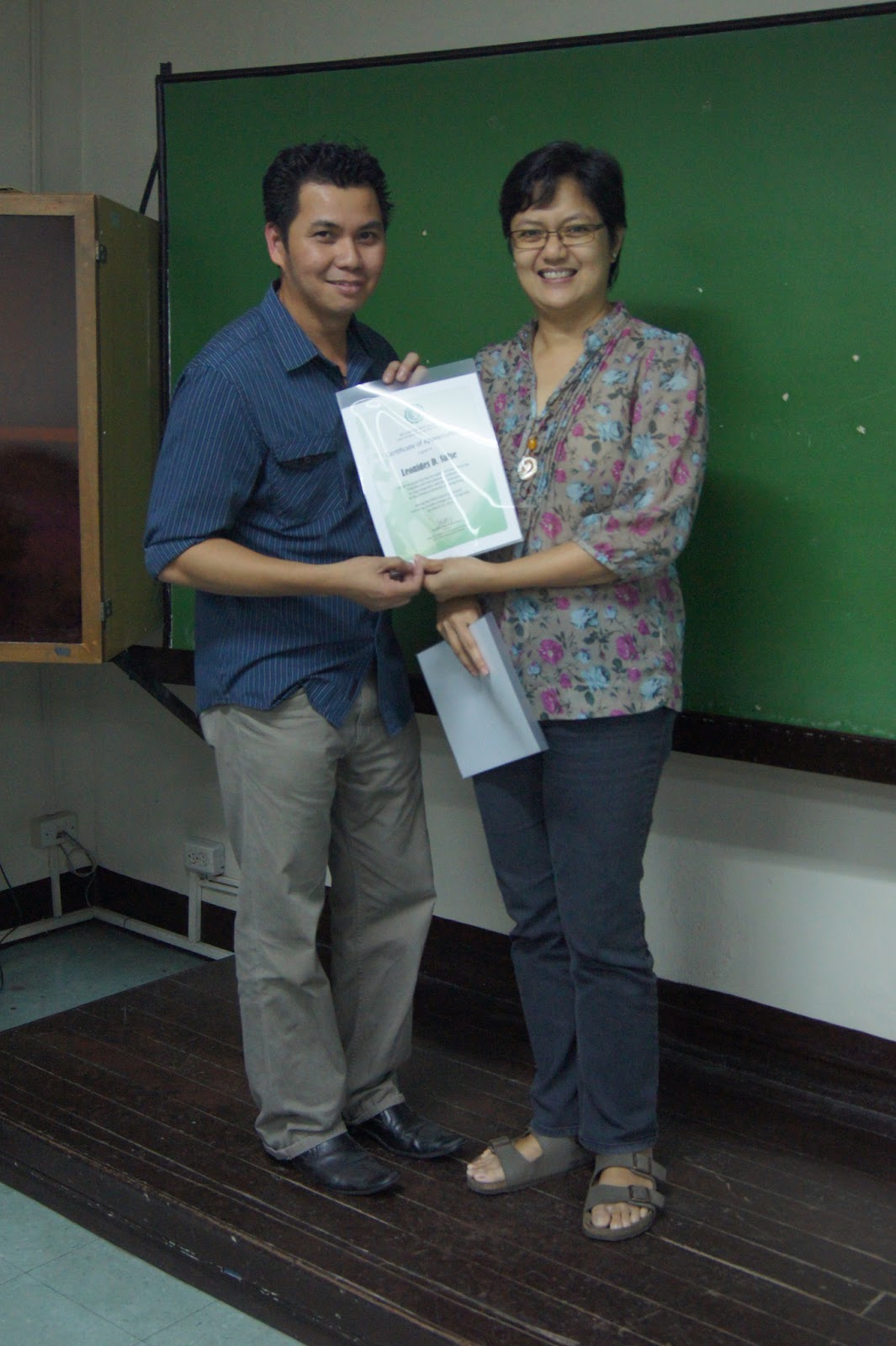
Sign Linguistics as a Philosophical Framework for Deaf Education
Mr. Leo Sulse


Thursday, 14 March 2013

Learning Session on the 3rd International Conference on Sign Linguistics and Deaf Education


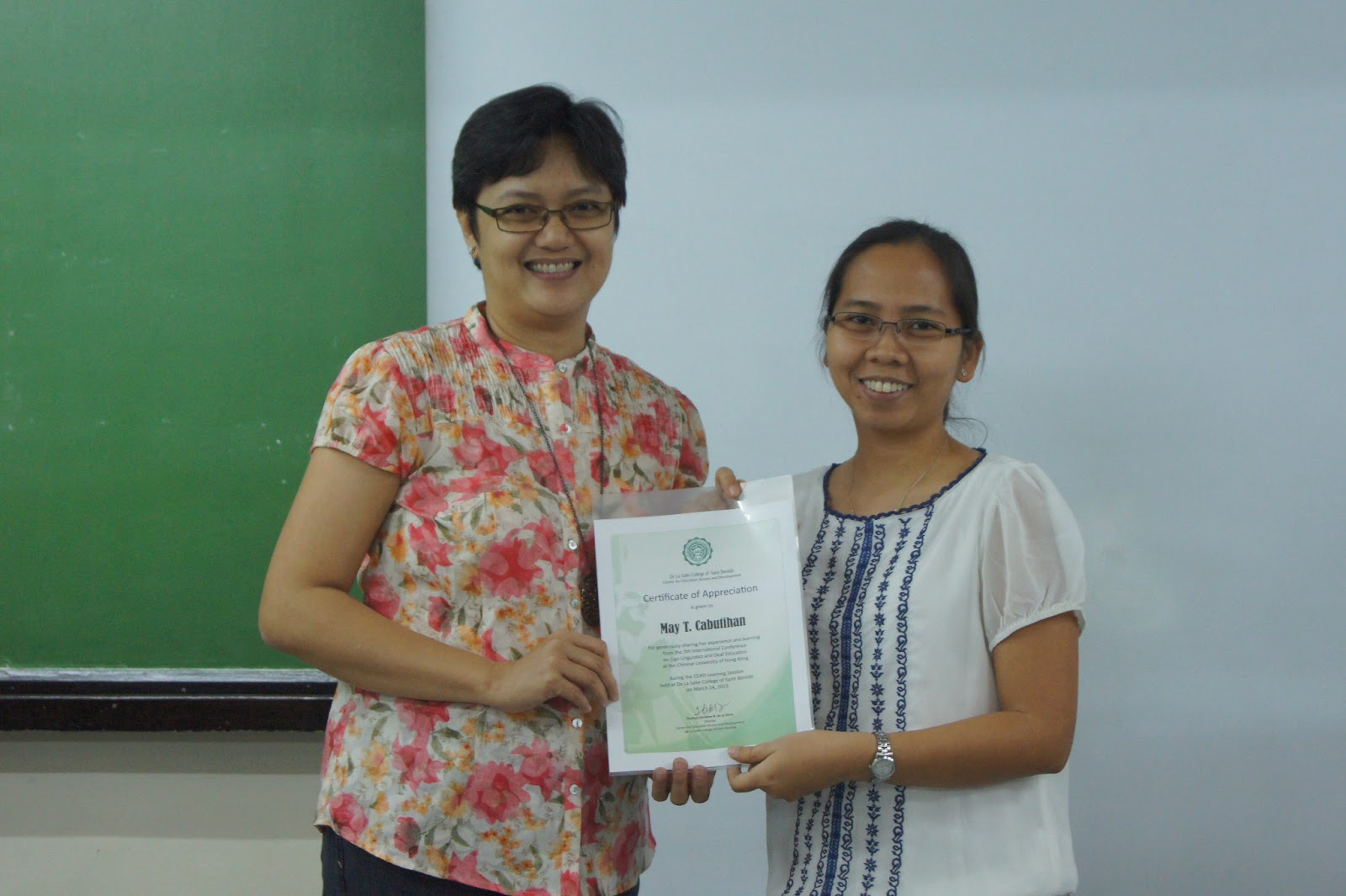
Experiences, Learnings, & Insights from the 3rd International Conference on Sign Linguistics and Deaf Education
May T. Cabutihan


CUHK Conference 2013: Reflections & Implications
Ma. Teresa Buenaventura


Quality of Bilingual Education Programs by Knoors, Daan and Wauters
Baby Ruth Evelina Reyes

Wednesday, 6 March 2013

Research Colloquium on Deaf Identity and Self-Efficacy

The Role of Social Support in promoting the Identity of Deaf Filipino Adolescents
by Christina S. Sison


This study determines the impact of peer and parent support, and support in the use of sign language on Deaf adolescents’ identity. Data were gathered from 107 Deaf Filipino adolescents by answering the Deaf Acculturation Scale (McCaw & Zea, 2010), Parent and Peer Support Scale (Willis, 1986), and Support in the use of Sign Language (adapted from Gregory, Bishop, & Sheldon, 1995). Using regression analysis, it was found that peer support promotes Deaf Identity.


Fostering Self-Efficacy inside the Classroom
by Leo Angelo G. Cabasag


Self-efficacy is commonly referred to as the people’s judgment of their capabilities to complete a task or to achieve a goal. How is self-efficacy related to students’ success in their academic life? What are the Deaf students’ experiences on Self-efficacy? What strategies can teachers use to build and develop self-efficacy among their students?

The session will focus on self-efficacy and how this concept plays a major role inside the classroom. The session will also provide opportunities for educators to deepen their understanding on various ways to foster self-efficacy.


Wednesday, 27 February 2013

Research Colloquium on Deaf Well-Being and Deaf Culture

Measuring Deaf Subjective Well-Being: Test Accommodation and Validation of the Satisfaction with Life Scale
by Royce A. Hernandez


A paper-and-pencil test adaptation of the Satisfaction with Life Scale (Diener, et. al, 1985) was carried out to measure the level of Subjective Well-Being of 123 Deaf college students. Test accommodation through an analysis and rewording of the original instrument was done with a slight improvement in the deaf readability and grade level equivalence. The adapted instrument obtained an acceptable reliability index indicating suitable internal consistency. Furthermore, results of CFA through SEM reveal that the instrument shows significant item-factor loadings and construct validity. The developed Satisfaction with Life Scale-Deaf is recommended for research use among Deaf respondents.


Learning Session: Deaf Culture in Classroom and Brief Overview on Deaf Issues
by Victoria Sakilayan and Ariscel Lobo


Deaf culture is really unique and special; a capitalized “D” represents the identity of Deaf individuals. Deaf people love to preserve their culture. Deaf culture involves their rights, needs and more. To be able to be accepted in their culture, one must know everything about their culture. If the parents find out that their child has a hearing loss, high stress experience can arise from it. It’s true, many parents experience this stress. Some even think “why is my child Deaf?” At first, they do not accept the fact that their child is deaf, but later on they do.

Some deaf individuals assume that they are part of the hearing world through use of residual hearing and some assume that they are culturally deaf or they have identity as a Deaf. Some deaf consider themselves bicultural since they are in both sides.

This session will provide information about the Deaf culture inside the classroom and hopefully, the audience will open their eyes on the culture and issues of Deaf individuals.